
What are reviews?
These days, online reviews are the backbone of marketing and promotion for your business. The catch though, is that they are (almost!) completely out of your control. Reviews are left by your customers or clients on platforms like Google, Facebook, Yelp, and more. When someone researches your business online, one of the first things they will see are the reviews. The review, and more importantly your response to it, will shape their influence of your business.
Why do reviews matter?
Besides the influence reviews have on the consumer, they serve several other purposes as well. Having many reviews improves your SERP (search engine results page) results, meaning you’ll be more likely to appear as a top result when someone Googles your industry or business. They build trust between potential clients and your business and increase your visibility leading to new sales. Most importantly, reviews and your response to them keep your business accountable.
Where are people leaving and viewing reviews?
Depending on your business, industry, and online presence, there are multiple places where a customer can leave a review. If you have a physical product that you sell, most wholesale sites or smaller e-commerce sites have a built in review feature that customers can use. For the service industries, many businesses have a place to write and share reviews on their website. But more than all of these, the two main places people go to view and leave reviews are Facebook and Google.
Facebook holds 19% of all customer reviews online, and 66% of customers are likely to share their thoughts, experiences, and opinions about services on Facebook. Leaving a review on Facebook, specifically, allows that particular review to reach a wider range of people since it is shared as a post from a customer’s profile. One tricky aspect however, is people only have the option to “recommend or not recommend” your business, and then of course they can write a response with their choice. This is a very black and white feature and leaves little room for gray area when it comes to shaping others’ opinions. People also have the opportunity to make a post and tag your business; it wouldn’t appear on the review page but nevertheless is still attached to your business’s profile.
Google is usually the first place people go to when researching a business. From there they can go to your website or social media profiles, and like reviews, those are all linked to your Google Business Profile. Google’s search algorithm looks at reviews and responses and uses them to determine your business’s ranking on their engine. These days, Google shows an AI overview at the top of a search results page. When you Google a business, what is shown is essentially a digital collage of information that it has pulled from various sources across the web, one of those sources being Google reviews. The content of those reviews and responses are usually summarized in the AI overview which heavily influences potential customers. One good feature about Google Reviews is the ability for a reviewer to rank a business from 1-5 stars then write a response to that ranking. Google then takes the average of those stars to give an overall star ranking. This fills in a lot of the gray area Facebook reviews don’t allow.
How to respond to online reviews.
You may be wondering, “Do I even have anything to do with these reviews? It’s out of my hands.” The answer is YES! You need to respond to all of your reviews, good or bad. Review responses are very important to the potential customer researching your business. It shows them that you do care about what people think of your products or services, and allows them to get a better feel for the people they would be supporting if they shopped with your business. As a matter of fact, 9 out of 10 customers are more likely to look past a negative review if they see that the business responded appropriately and addressed the issue!
Everyone is looking at reviews, so it’s crucial you make a good impression. Here is a quick breakdown on how to navigate your responses to online reviews. These all apply to both good and bad reviews.
Respond sooner than later: Not only does the person who took the time to leave a review deserve a prompt response, but someone reading who sees a review that’s gone three weeks without a response will get the impression that the business doesn’t entirely care about their customers’ experience and thoughts.
Positivity is key: Even for bad reviews, keeping a positive demeanor in your response shows the customer and viewer that you take accountability and want to make things right. There are plenty of spaces online to be hateful, don’t let it be in your business’s public reviews.
Don’t argue: We all know the saying in business, “The customer is always right!” In terms of a review, what they have written is true and accurate to their experience with your business. Arguing only opens the door for further backlash, and shows other viewers that you care more about getting the final say than caring for your customers.
Validate the reviewer: Like previously stated, what they left in their review is true to them. It is not a good idea to tell someone what happened, what they did, or their thoughts on something are wrong. Instead, own up to their feelings and let them know you understand where they are coming from. Your business is personal to you, but try to remove yourself from the situation and look at it from a different perspective.
Personalize it: Imagine someone leaves a 5 star review talking about how your lawn care business came at the nick of time to clean up landscaping before a wedding shower at their house. In your response, loosely tie in the information they gave you and make it a personalized message for them. An example for the response could be: “We were very glad to help you out before this exciting event! We hope everyone enjoyed their time together and wish the best to the bride and groom. Thank you for your review and your business.”
State the facts: In terms of a bad review, you can still defend yourself and your business in your response by stating your facts. It is important to never tell a customer they were wrong, but like them, state what is true to you. We will have some examples of this below.
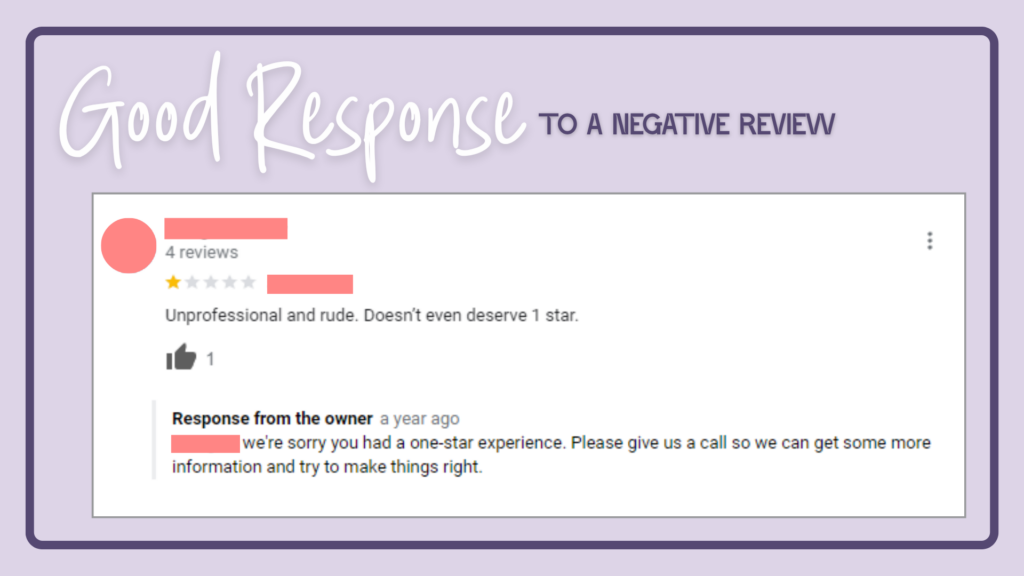
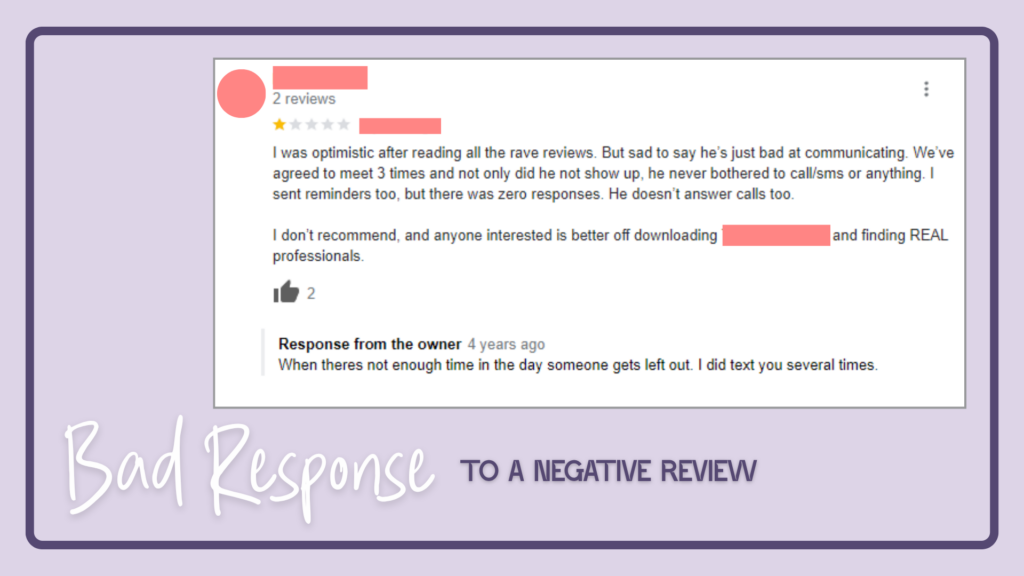
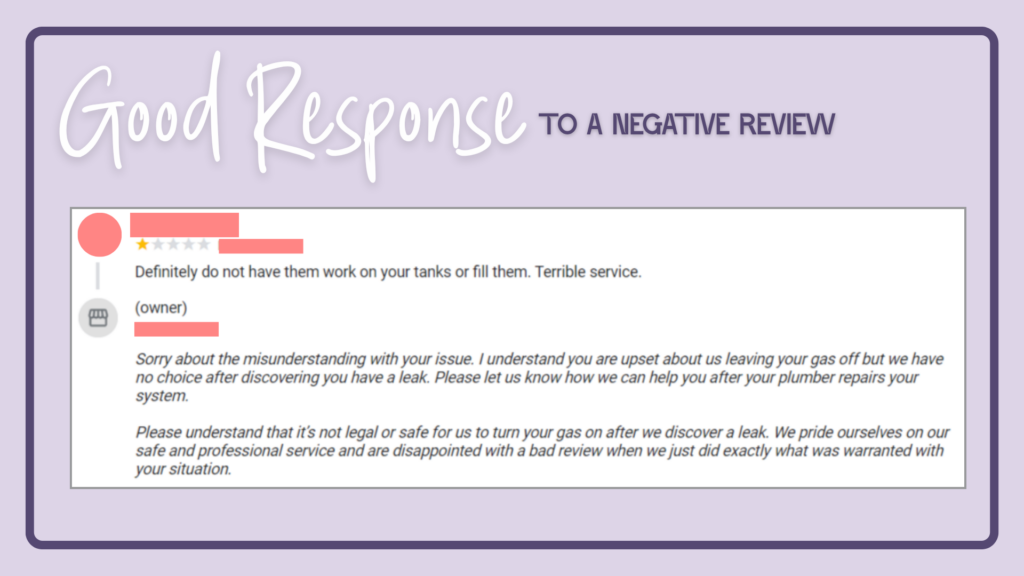

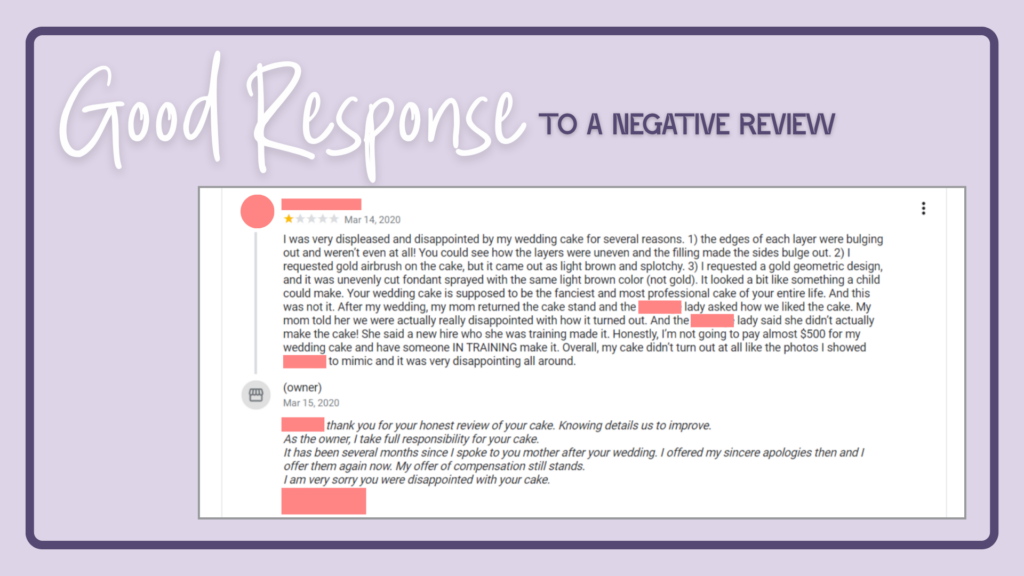
Don’t let your business fall behind because of online reviews. Even with bad reviews, you have the opportunity to turn perceptions around with your response. Think smart, what would YOU want a business to say to you if you left a negative review? And remember the old rule of thumb when it comes to posting something online, it never truly disappears!